Available works
For enquiries, get in touch.
Archive
For enquiries about similar designs, get in touch.

01 Jewels/
“One cannot collect all the beautiful shells on the beach. One can collect only a few, and they are more beautiful if they are few.” – Anne Morrow Lindbergh (Gift from the Sea, 1955)
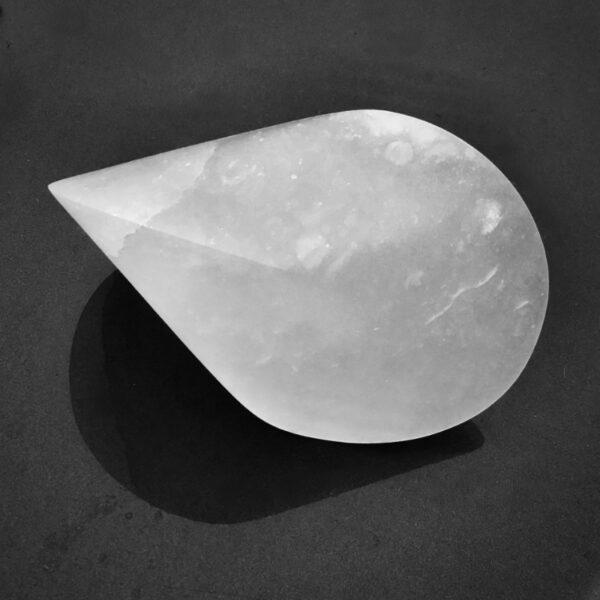
The She Sells Seashells series started out with something that isn’t really a seashell at all: the oloid, a 3D geometric form discovered by sculptor, inventor, and mathematician Paul Schatz in 1929.
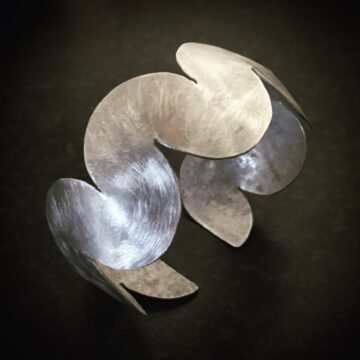
The first time I saw an oloid (carved in soapstone), I was completely smitten! Aside from its beautiful form, the magic lies in the movement of the oloid. When it rolls, it traces an ‘S-shape’ and all points on its surface eventually touch the plane it rolls on – a rare property it shares with very few other shapes!
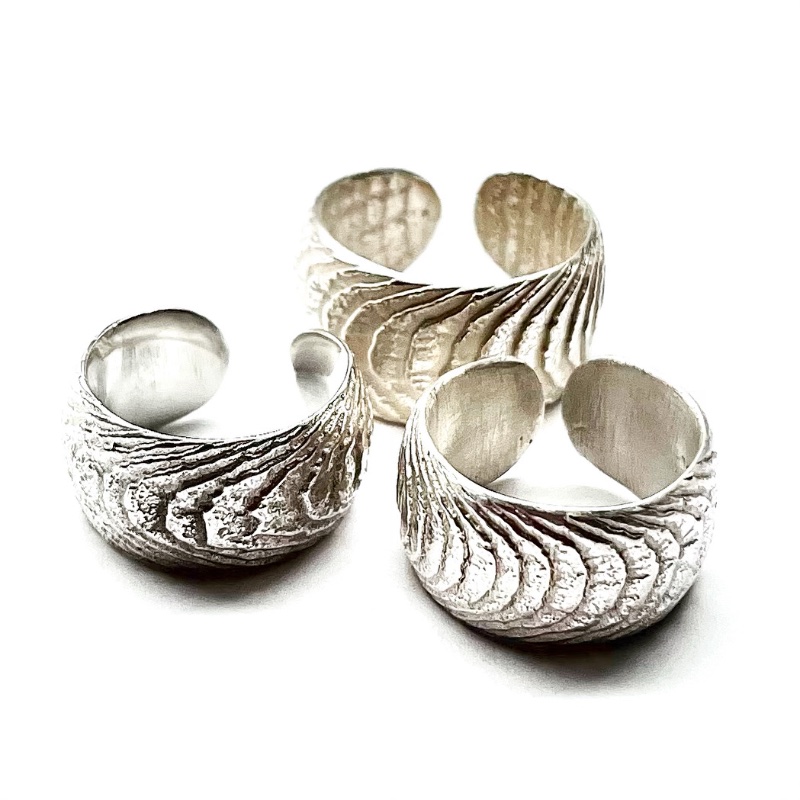
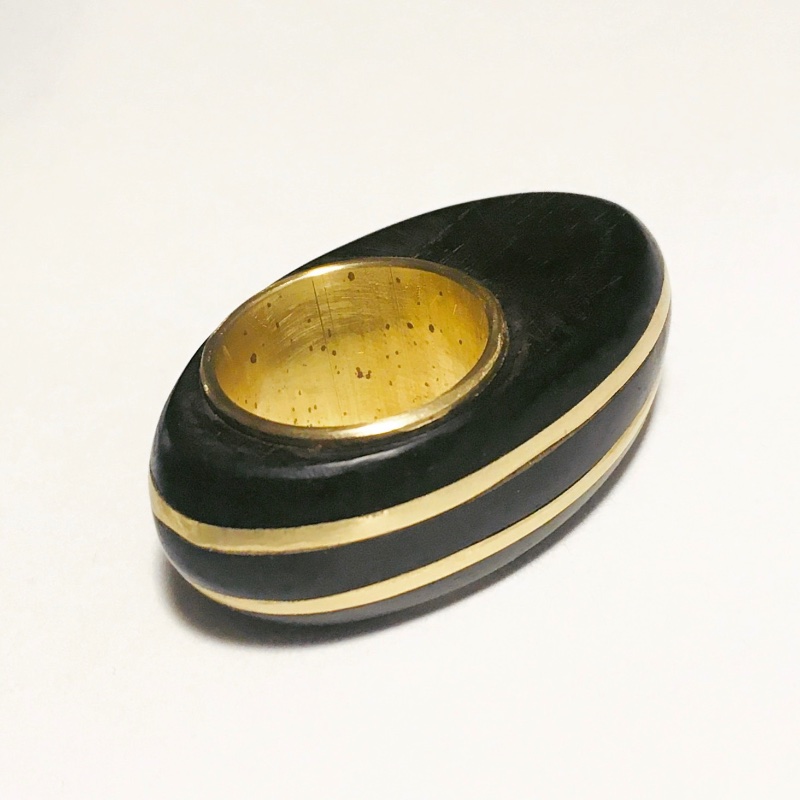
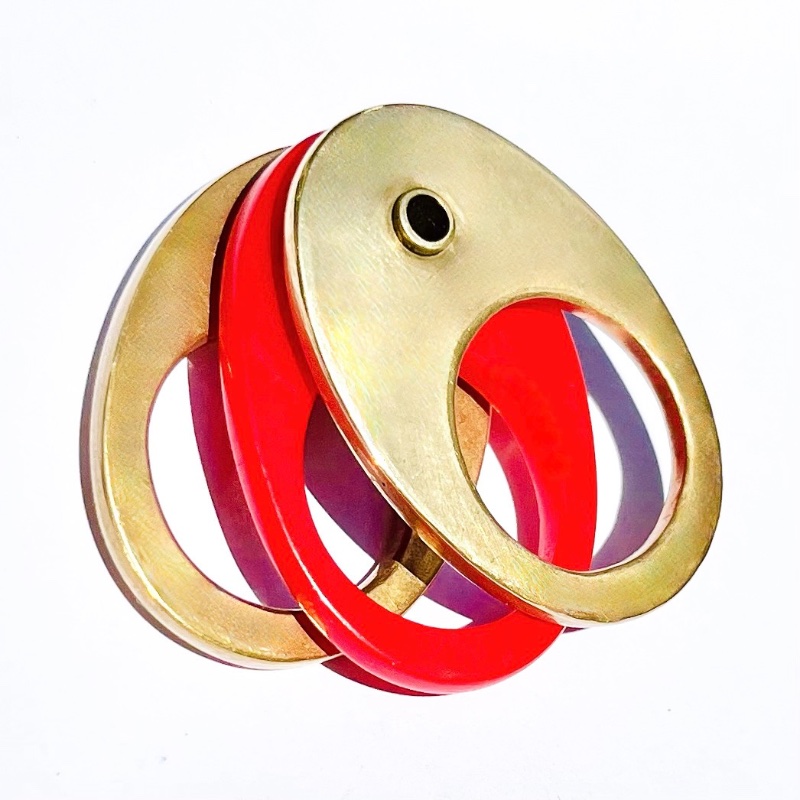
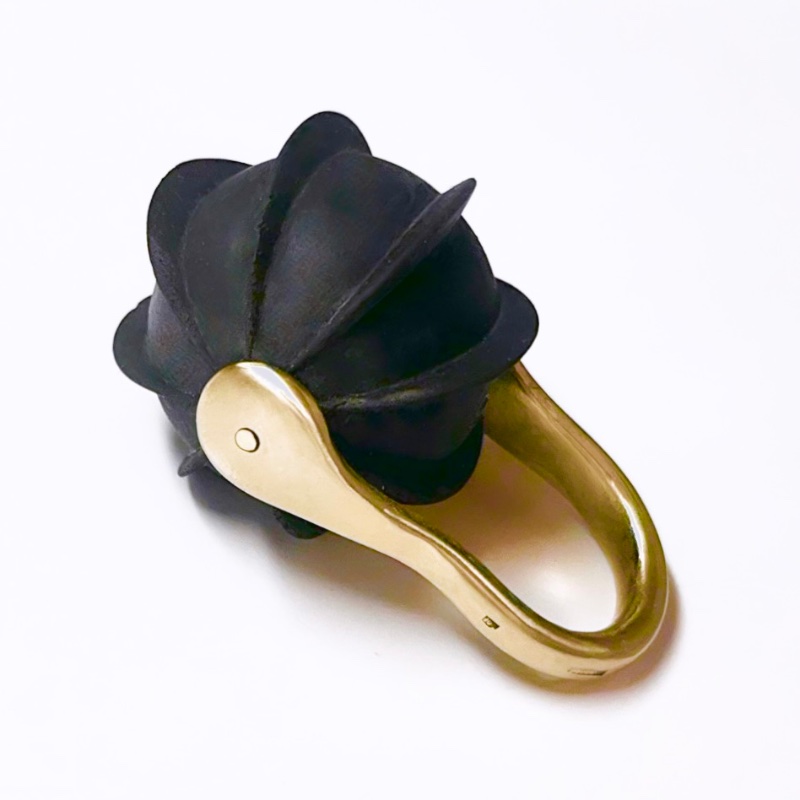
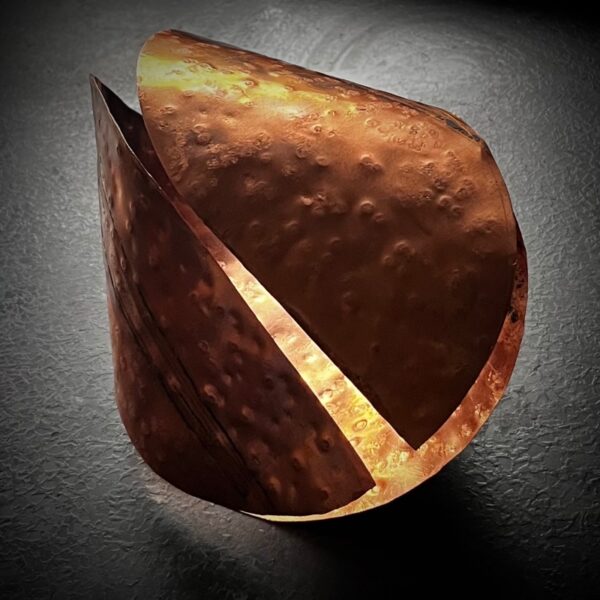
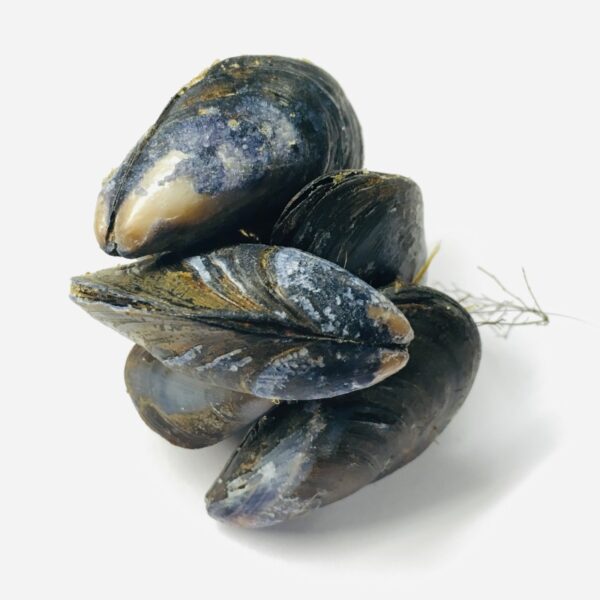
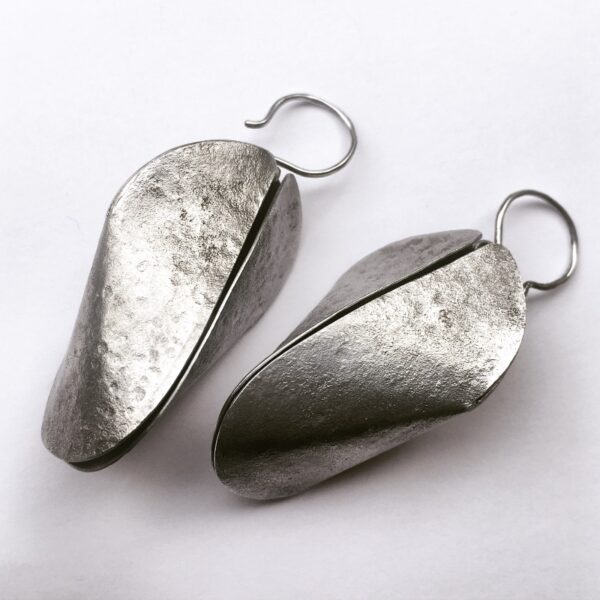
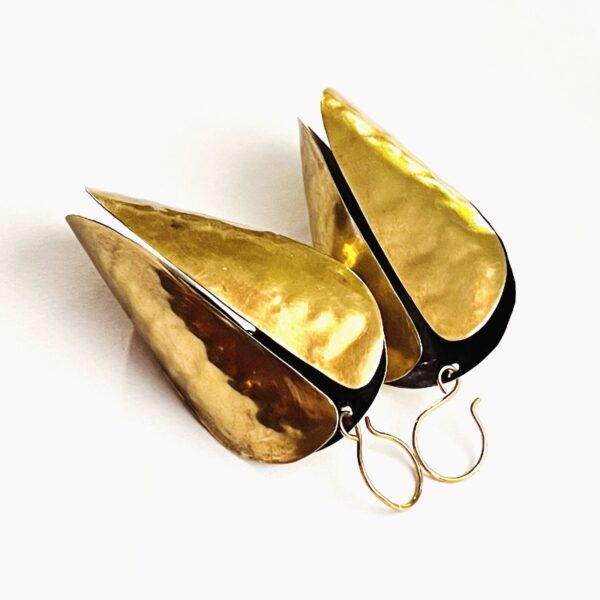
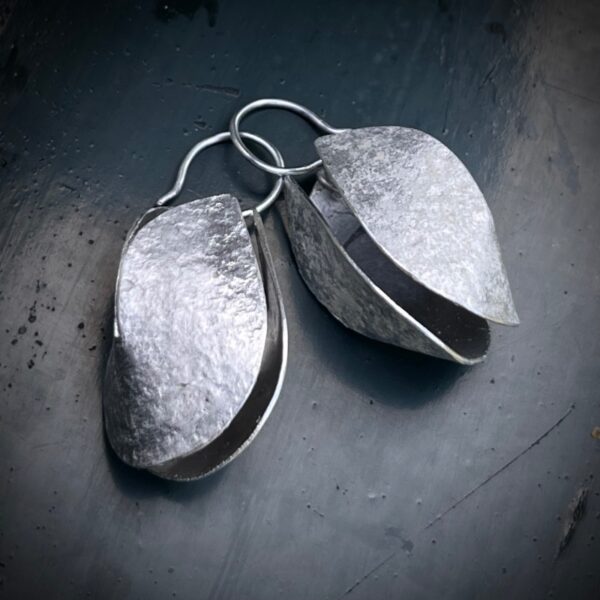
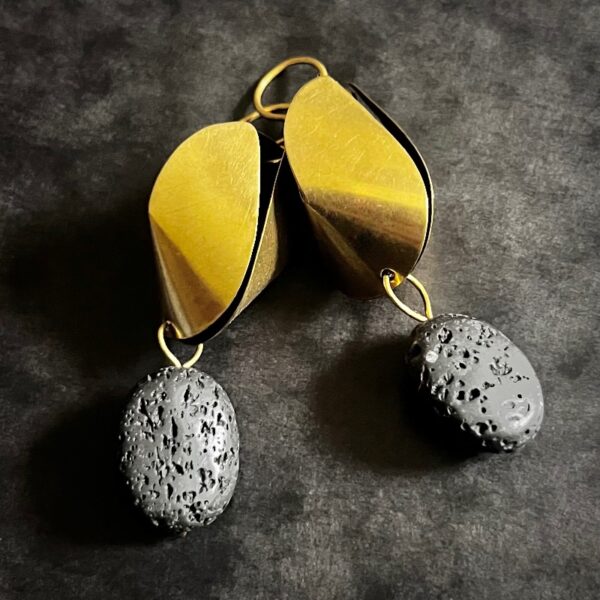
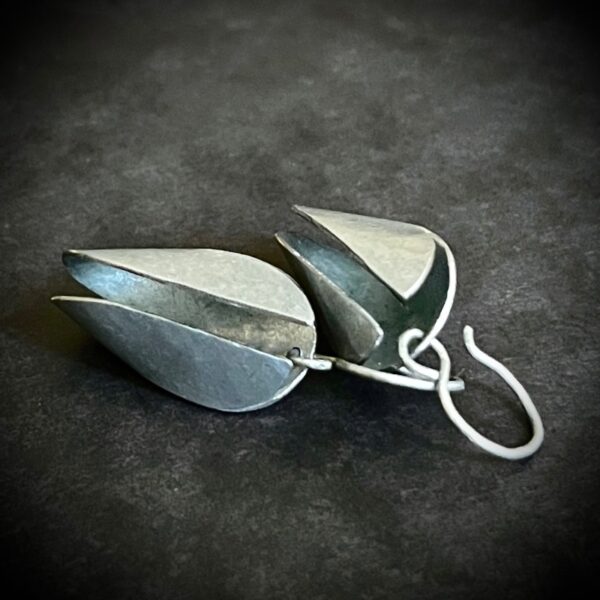
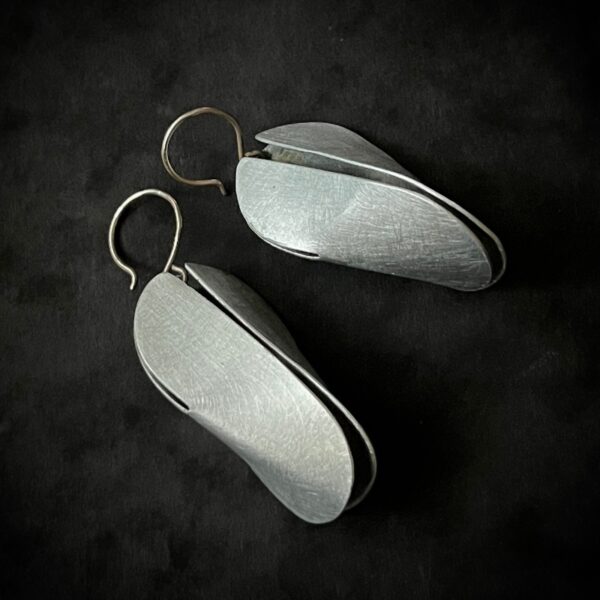
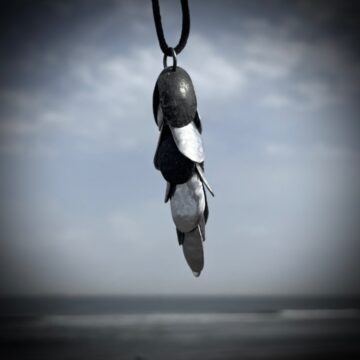
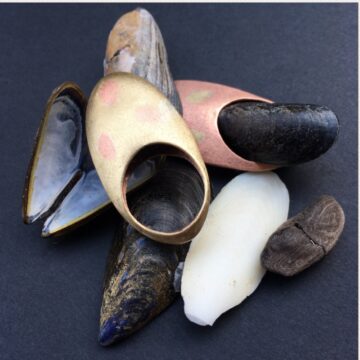
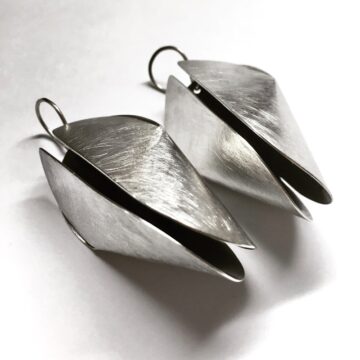
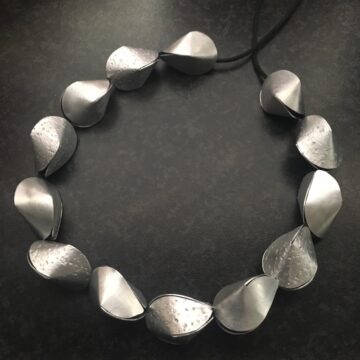
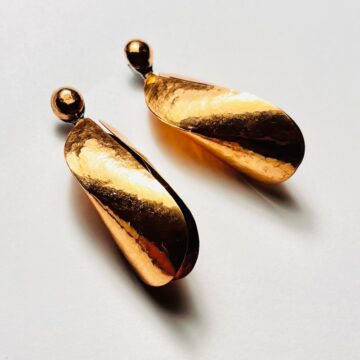
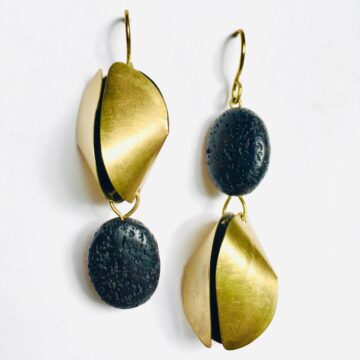
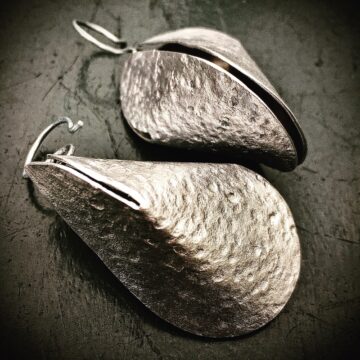
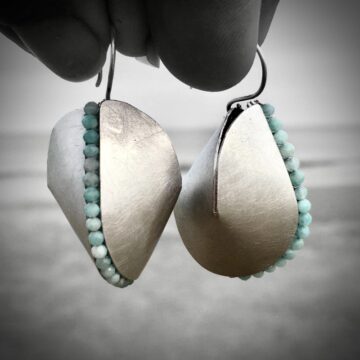
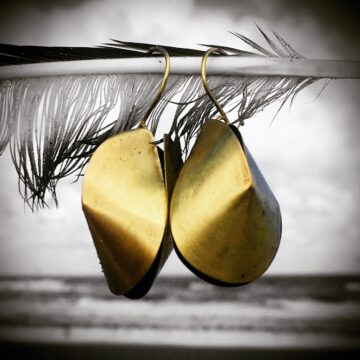
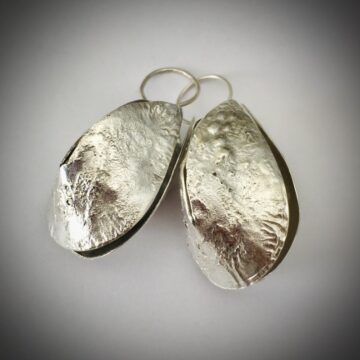
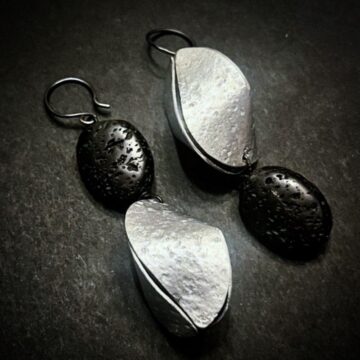
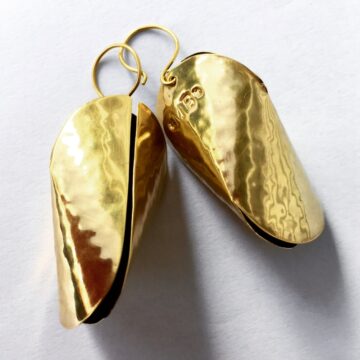
It took quite some research and tinkering to discover how I could recreate this form in metal, light enough to wear as jewellery. Serendipitously, I ended up making an adapted form that I call the open-ended oloid, which rather resembles a mussel shell.
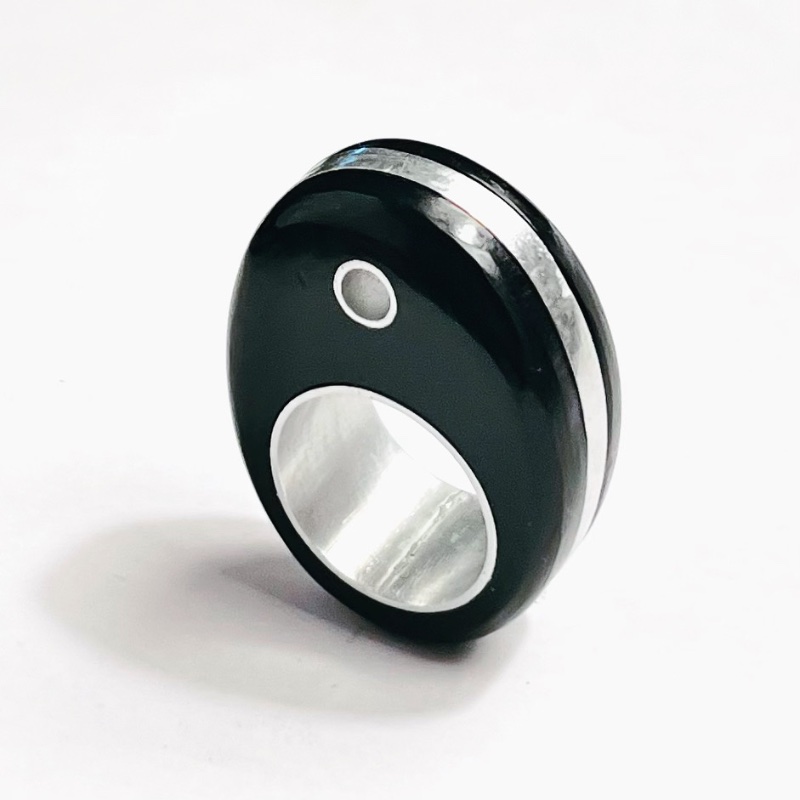
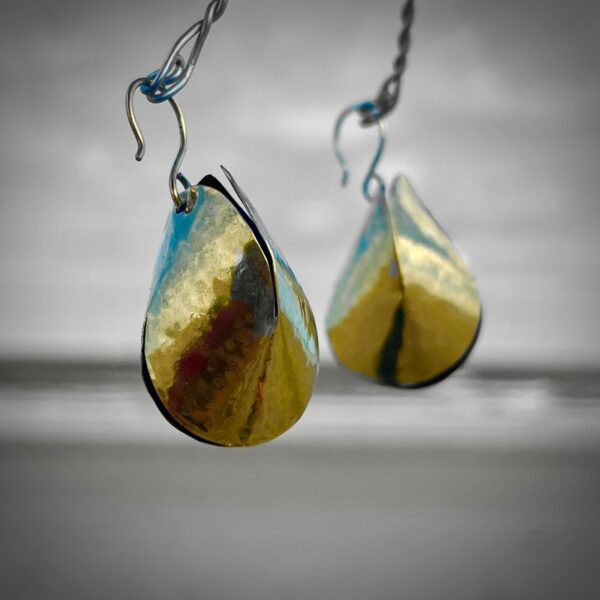
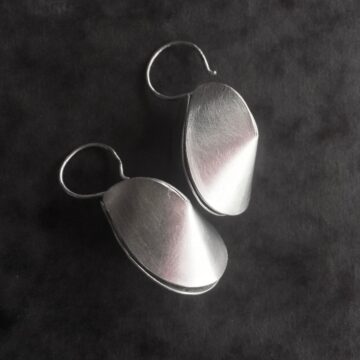
Later on, I added ovoid shell forms to the series. Surely one day I will add more, always keeping in mind Mary Anning – the pioneering 19th-century beachcombing palaeontologist to whom the famous tongue-twister ‘She sells seashells by the seashore’ paid tribute over a century ago.
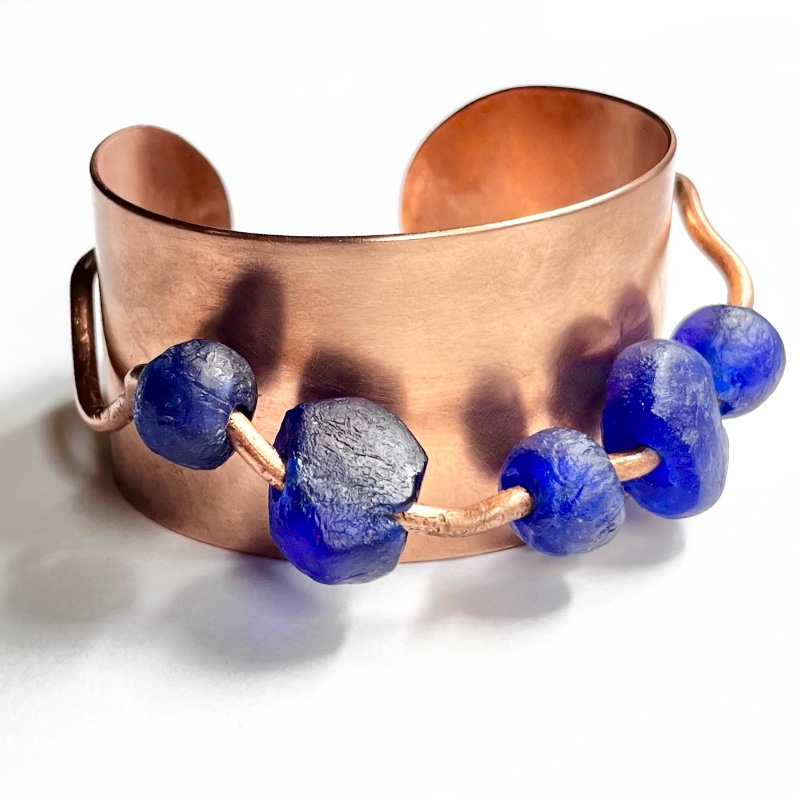
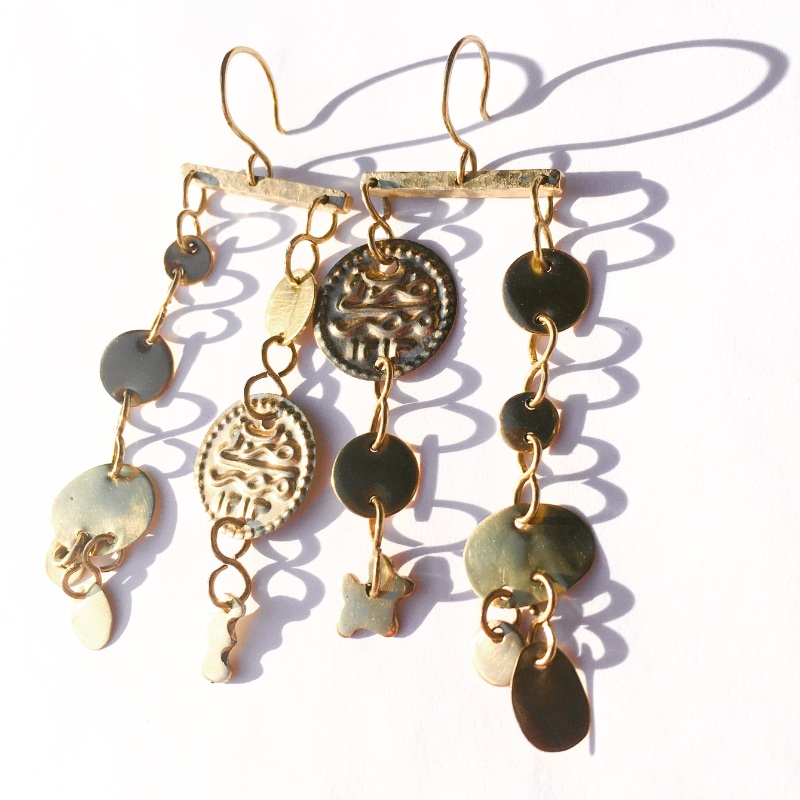
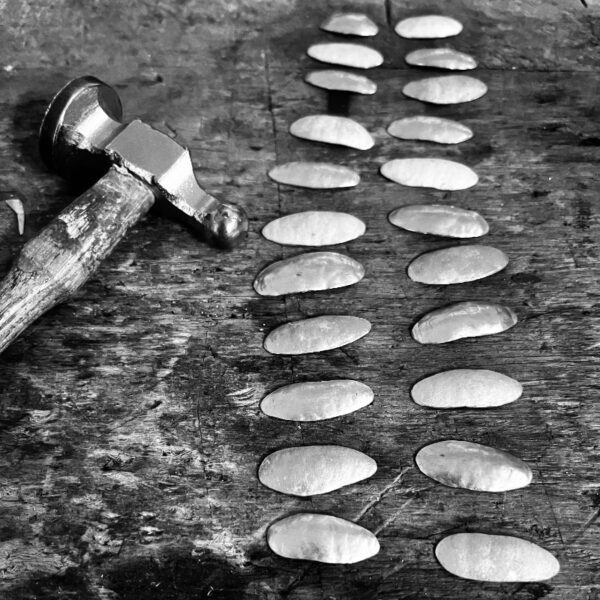
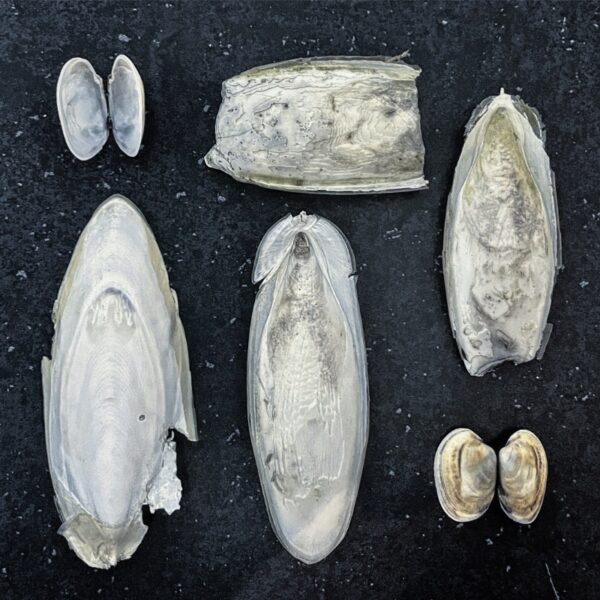
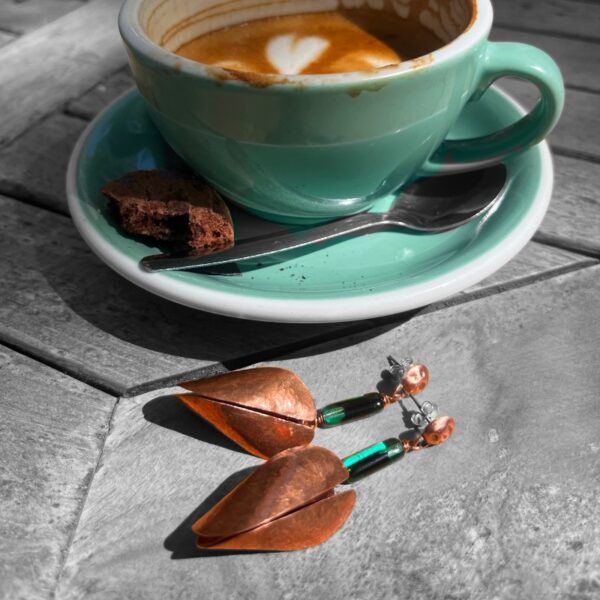
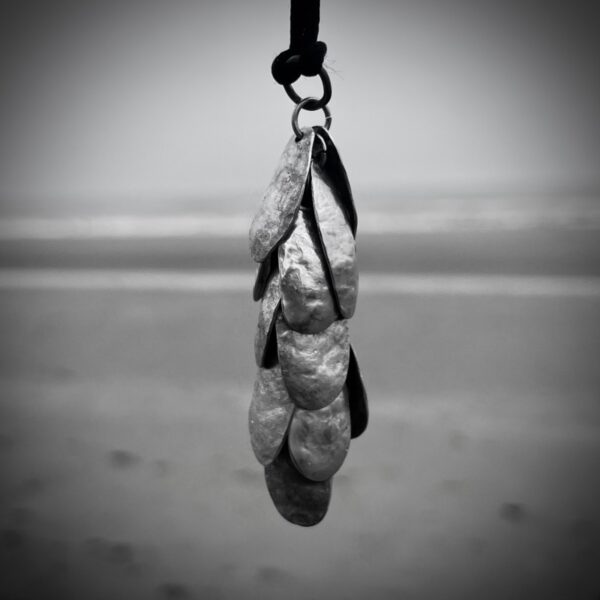
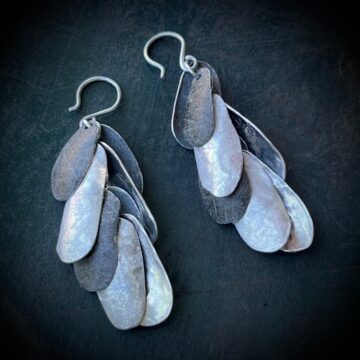
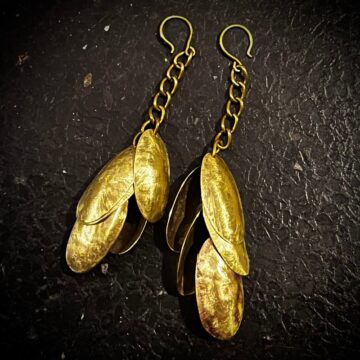
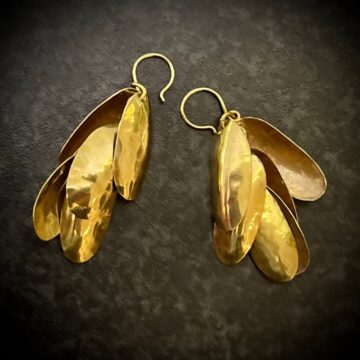
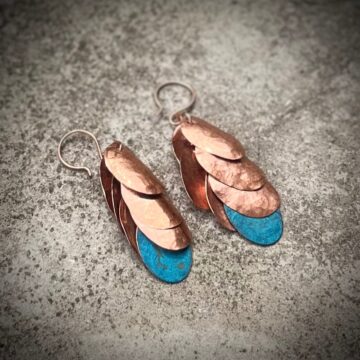
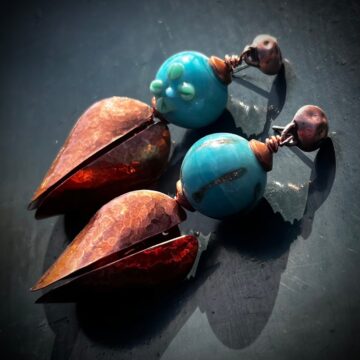
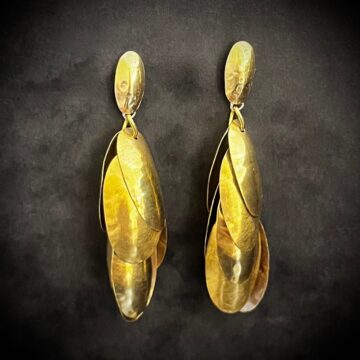
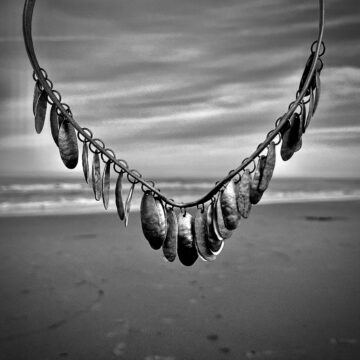
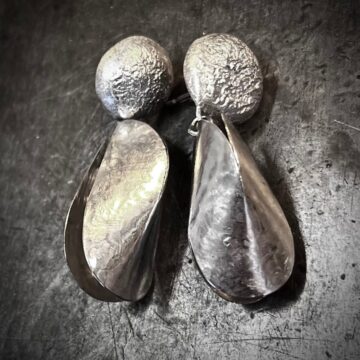
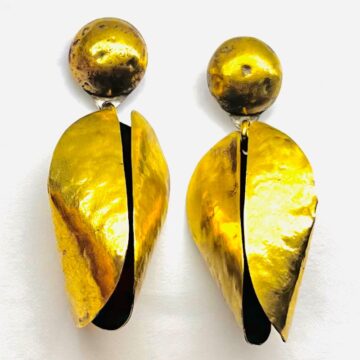
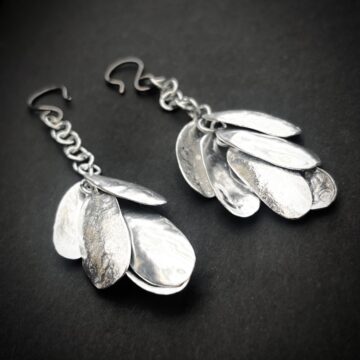
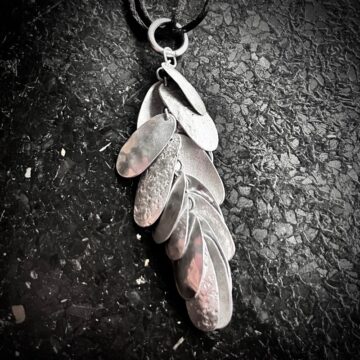
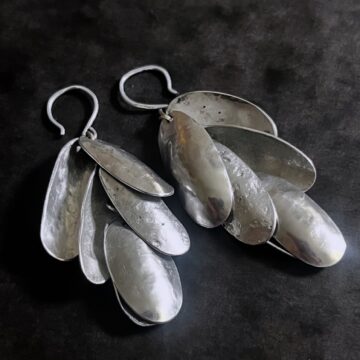
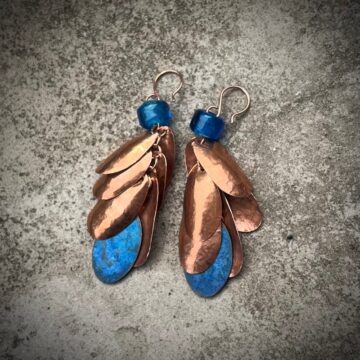
Ovoid forms (shaped like cuttlefish bones – ossa sepia) and open-ended oloid forms (where I also experiment with the proportions of the form and by adding contrasting beads). For now…
Handmade with a saw or scissors, chasing hammer, pliers and file. I hammer the hollow forms on a self-made pitch bowl, filled with dried beans and beeswax (rather than the traditional tar) or on a steel anvil for texture. They are polished first by hand and then in an electric rock tumbler, also for hardening. For earrings with studs on top, some soldering is involved. On the hollow inside, I leave traces of the past like dark oxidation so when you look carefully, you can see there is a history there.
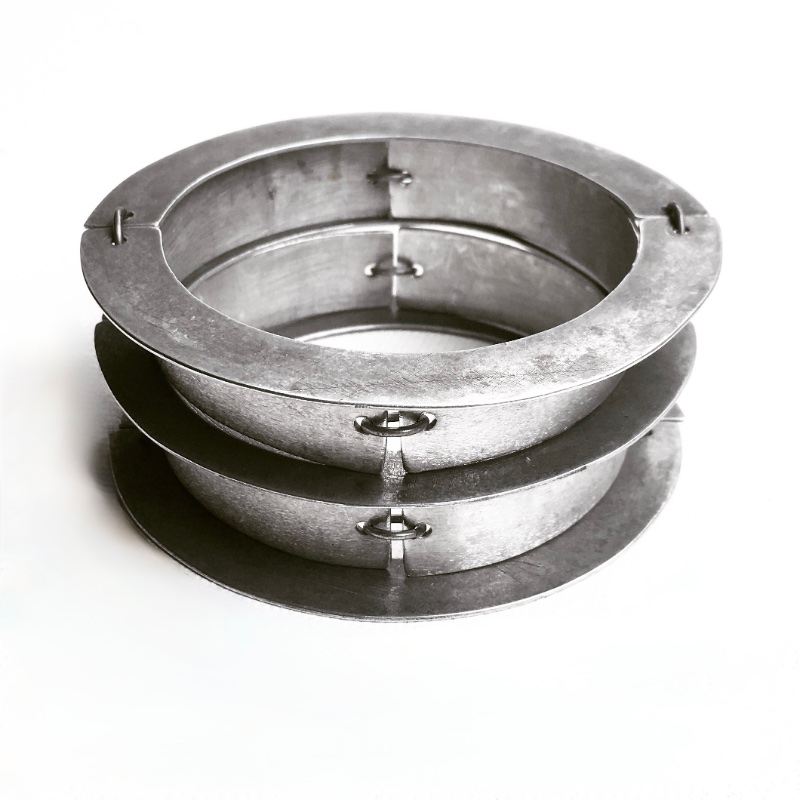
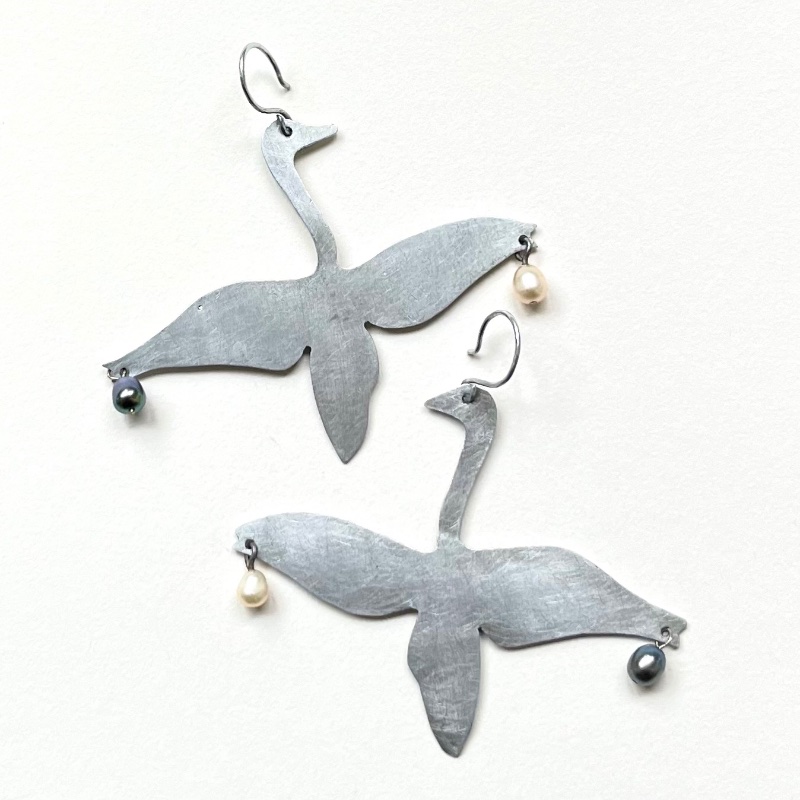
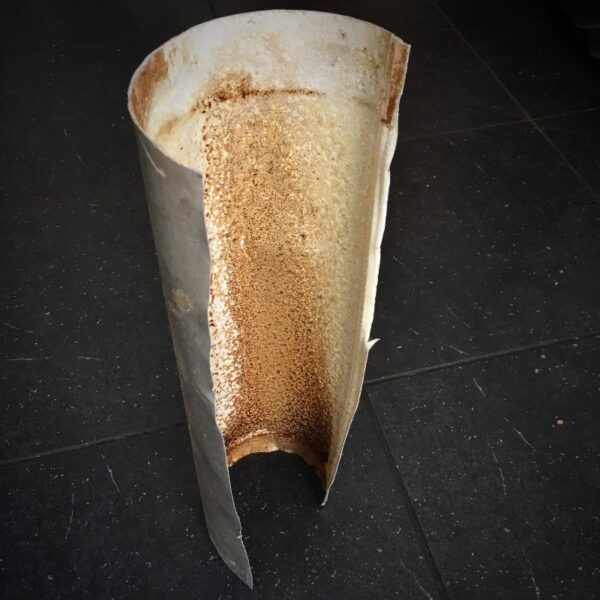
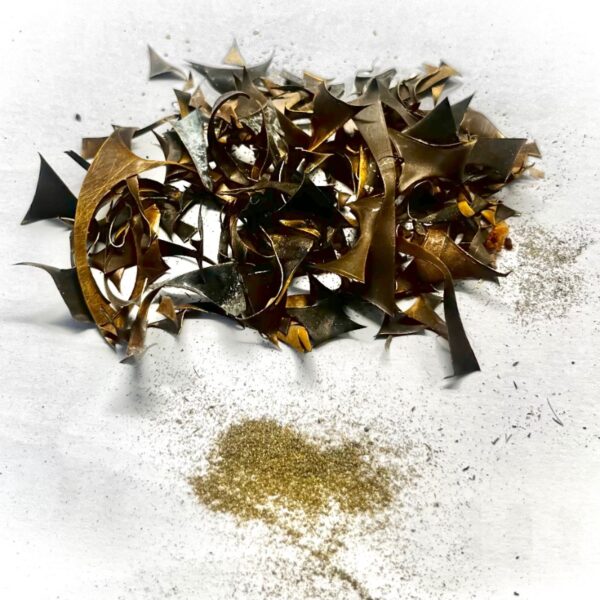
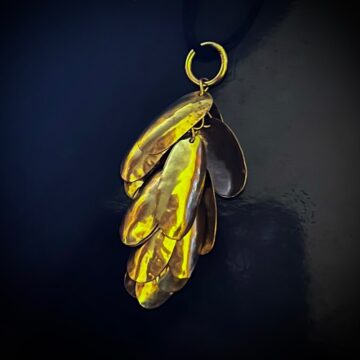
Salvaged or offcut scrap metals like brass and copper shim stock (paper-thin sheet metal used to align components in machinery) or textured aluminium (from an old boiler flue). On rare occasions, I make them in repurposed silver.
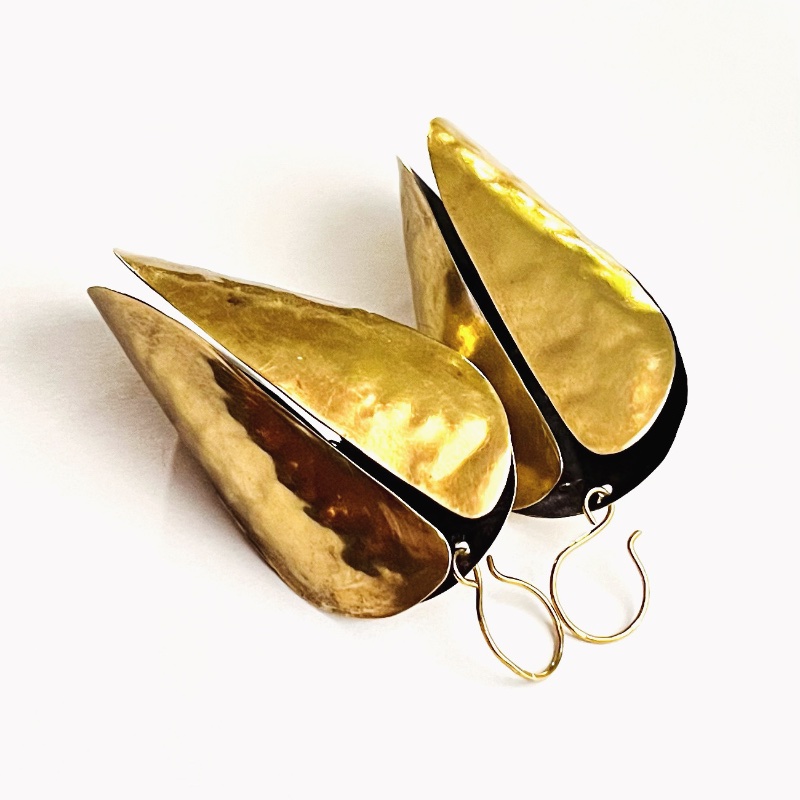
“…and maggie discovered a shell that sang so sweetly she couldn’t remember her troubles..” – E.E. Cummings (95 Poems, 1958)
01 Jewels/
“One cannot collect all the beautiful shells on the beach. One can collect only a few, and they are more beautiful if they are few.” – Anne Morrow Lindbergh (Gift from the Sea, 1955)
The She Sells Seashells series started out with something that isn’t really a seashell at all: the oloid, a 3D geometric form discovered by sculptor, inventor, and mathematician Paul Schatz in 1929.
The first time I saw an oloid (carved in soapstone), I was completely smitten! Aside from its beautiful form, the magic lies in the movement of the oloid. When it rolls, it traces an ‘S-shape’ and all points on its surface eventually touch the plane it rolls on – a rare property it shares with very few other shapes!
It took quite some research and tinkering to discover how I could recreate this form in metal, light enough to wear as jewellery. Serendipitously, I ended up making an adapted form that I call the open-ended oloid, which rather resembles a mussel shell.
Later on, I added ovoid shell forms to the series. Surely one day I will add more, always keeping in mind Mary Anning – the pioneering 19th-century beachcombing palaeontologist to whom the famous tongue-twister ‘She sells seashells by the seashore’ paid tribute over a century ago.
Ovoid forms (shaped like cuttlefish bones – ossa sepia) and open-ended oloid forms (where I also experiment with the proportions of the form and by adding contrasting beads). For now…
Handmade with a saw or scissors, chasing hammer, pliers and file. I hammer the hollow forms on a self-made pitch bowl, filled with dried beans and beeswax (rather than the traditional tar) or on a steel anvil for texture. They are polished first by hand and then in an electric rock tumbler, also for hardening. For earrings with studs on top, some soldering is involved. On the hollow inside, I leave traces of the past like dark oxidation so when you look carefully, you can see there is a history there.
Salvaged or offcut scrap metals like brass and copper shim stock (paper-thin sheet metal used to align components in machinery) or textured aluminium (from an old boiler flue). On rare occasions, I make them in repurposed silver.
“…and maggie discovered a shell that sang so sweetly she couldn’t remember her troubles..” – E.E. Cummings (95 Poems, 1958)
For enquiries, get in touch.
For enquiries about similar designs, get in touch.
01 Jewels/