Available works
For enquiries, get in touch.
Archive
For enquiries about similar designs, get in touch.
02 Objects/
“may came home with a smooth round stone as small as a world and as large as alone.” – E.E. Cummings (95 Poems, 1958).
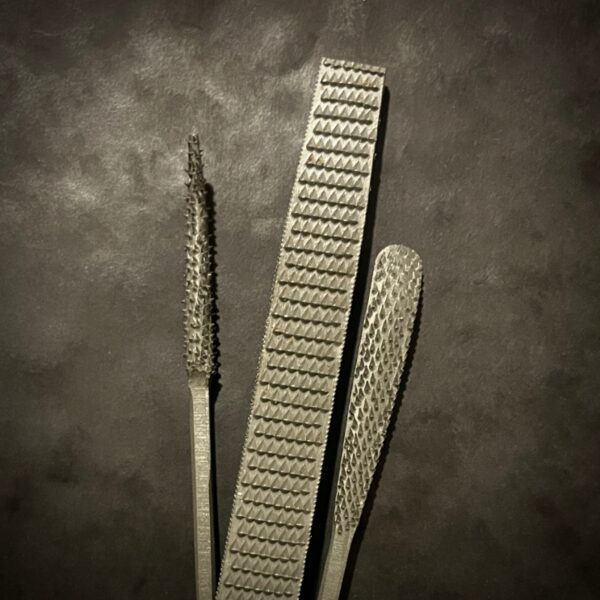
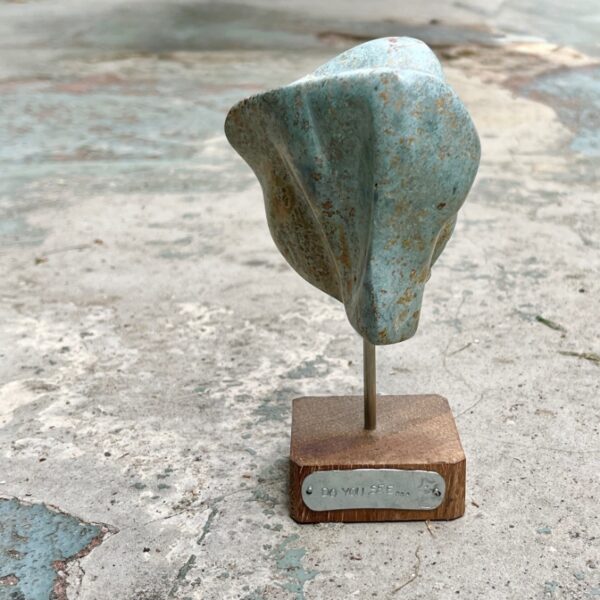
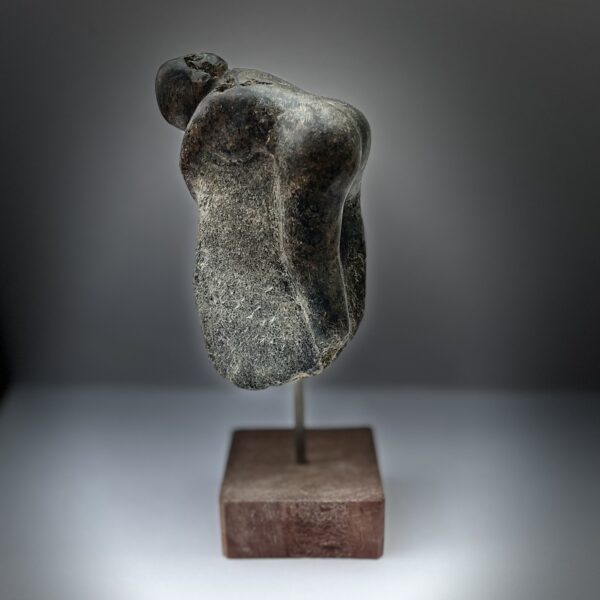
During a visit a few years ago to my favourite museum in The Hague, Beelden aan Zee, I bought my first piece of soapstone with accompanying tools (scrapes, files, and rough sandpaper). It was an instant match, for one because soapstone requires a completely different way of thinking and approaching form. With jewellery-making, I am generally working from the inside out—building a form. With sculpting soapstone, it’s the other way around, working from the outside in, carving away for the form to reveal itself. And unlike with clay, you can’t start over. Once some of it has been been removed it is gone, pulverised, you can’t put it back. So my sculptures in soapstone, even if they are experimental in form, are quite serious and deliberate in terms of process. They take time to develop, create and ultimately finish to a high polish. I only make them outside and now that I’ve found a place to source offcut pieces of soapstone, it’s safe to say: “I’m just getting started!”
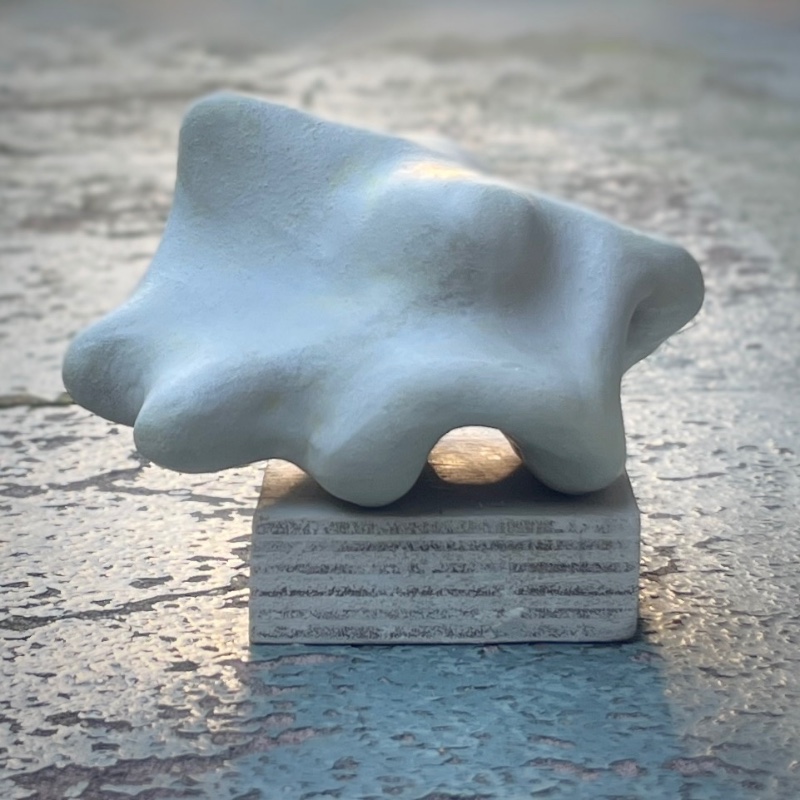
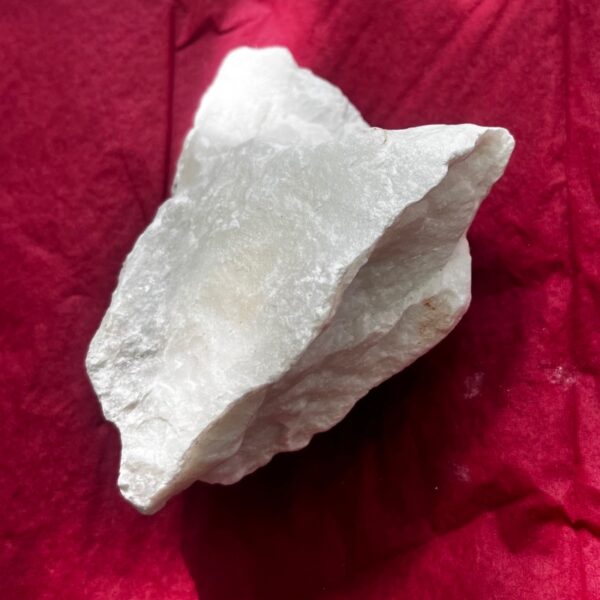
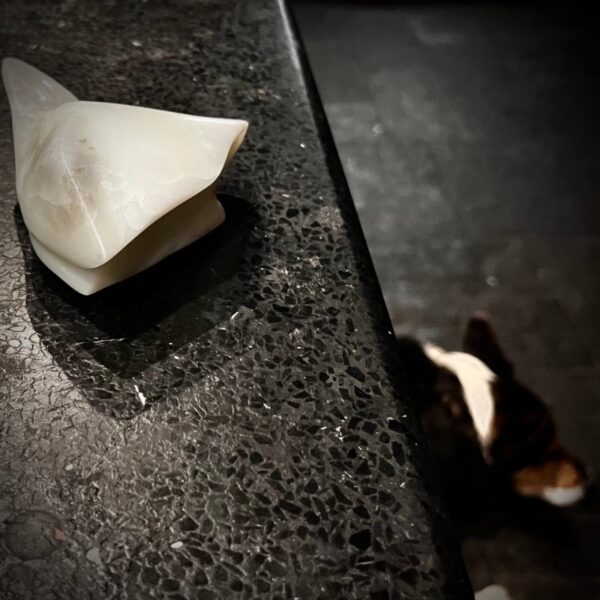
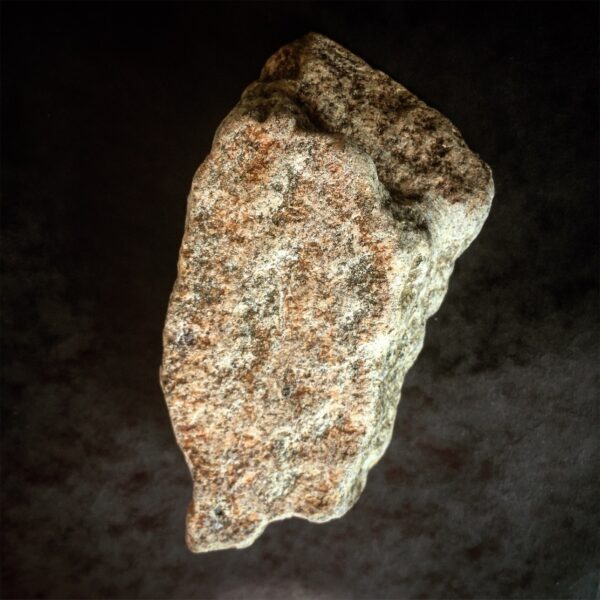
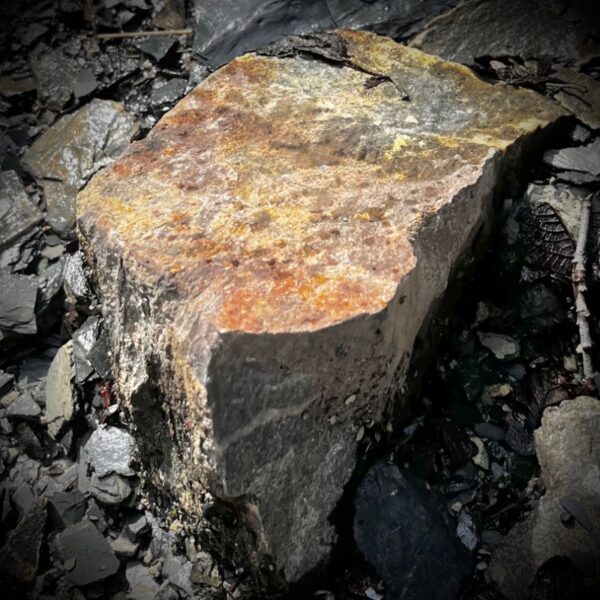
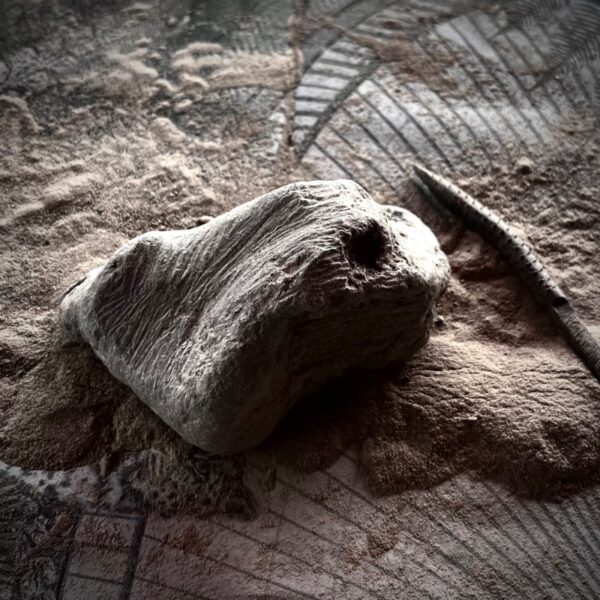
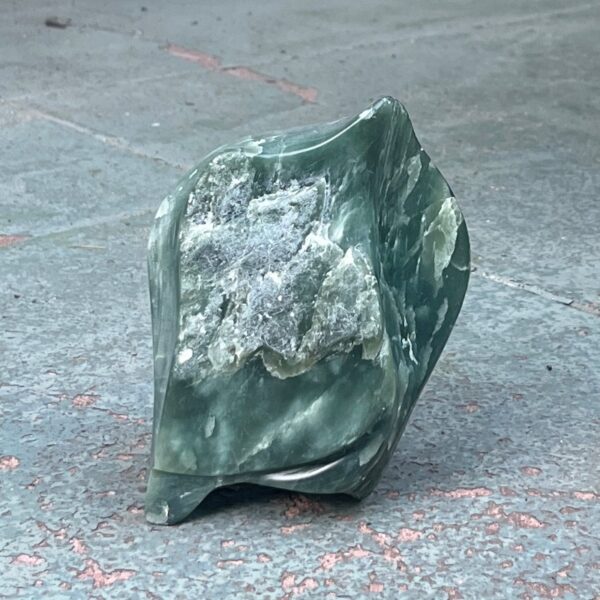
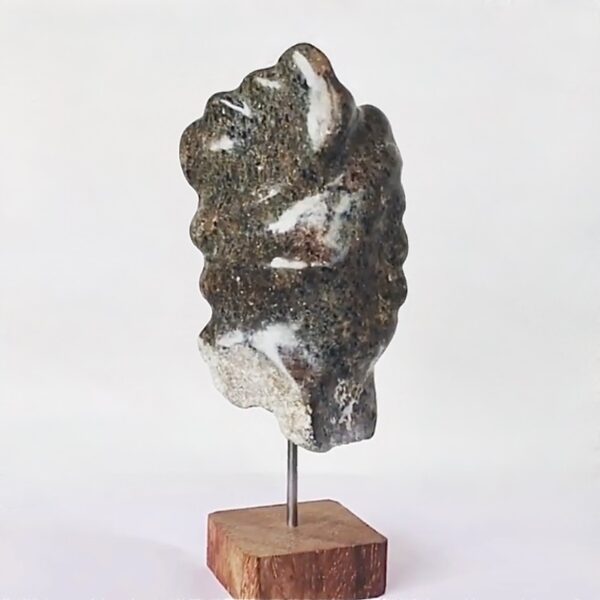
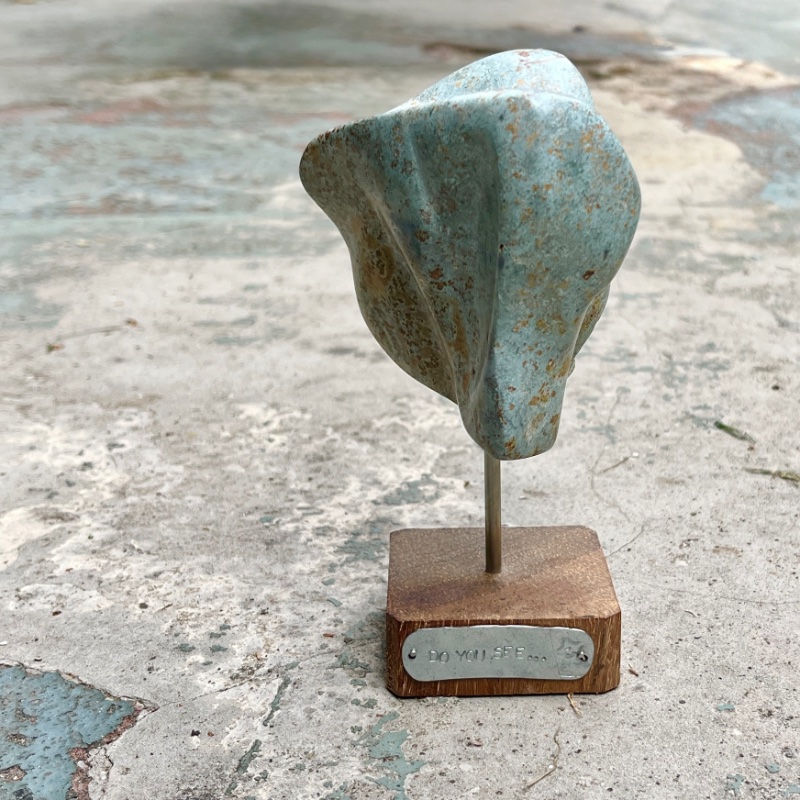
The initial inspiration for the form that I work towards is the rough stone at the beginning. I try to see the direction of the vein patterns in the rock, visualising the parts that could be rounded and other parts where I could create cavities. Sometimes I have a vague pre-set idea in the back of my mind. This process is organic and sometimes, even after I think I am done, I change my mind and revisit a piece to get it ‘just so’. I always leave a section of the stone raw, uncarved and unpolished, so you can see where the transformation started. The end result ranges from semi to fully abstract forms.
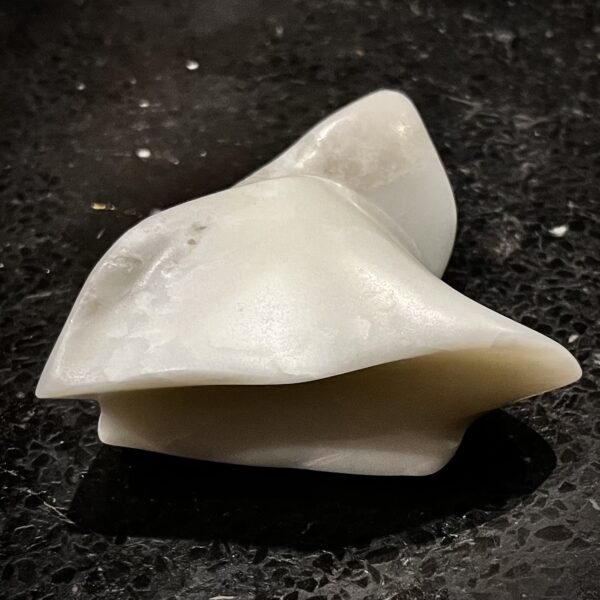
Scraping, rasping, filing and finally, truly endlessly polishing the surface to a marble-like sheen. If this process were not so physically demanding, I would work on these sculptures much more often!
Soapstone. After my first buy at the museum, I bought more stones at an art shop in the east of the country where I do a lot of my outdoor work. The soapstones in Dutch arts and crafts shops are primarily sourced from Brazil, China and India — not ideal in terms of distance and local extraction consequences. After a long and frustrating search, I have now found an atelier that sells offcut pieces of Finnish soapstone — leftovers from big sculptures and gravestones. Crossing fingers that despite the usual higher magnesite content of Finnish stones, making them harder to manipulate, these will work out!
“How often I found where I should be going only by setting out for somewhere else.” – R. Buckminster Fuller (RBF Institute)
02 Objects/
“may came home with a smooth round stone as small as a world and as large as alone.” – E.E. Cummings (95 Poems, 1958).
During a visit a few years ago to my favourite museum in The Hague, Beelden aan Zee, I bought my first piece of soapstone with accompanying tools (scrapes, files, and rough sandpaper). It was an instant match, for one because soapstone requires a completely different way of thinking and approaching form. With jewellery-making, I am generally working from the inside out—building a form. With sculpting soapstone, it’s the other way around, working from the outside in, carving away for the form to reveal itself. And unlike with clay, you can’t start over. Once some of it has been been removed it is gone, pulverised, you can’t put it back. So my sculptures in soapstone, even if they are experimental in form, are quite serious and deliberate in terms of process. They take time to develop, create and ultimately finish to a high polish. I only make them outside and now that I’ve found a place to source offcut pieces of soapstone, it’s safe to say: “I’m just getting started!”
The initial inspiration for the form that I work towards is the rough stone at the beginning. I try to see the direction of the vein patterns in the rock, visualising the parts that could be rounded and other parts where I could create cavities. Sometimes I have a vague pre-set idea in the back of my mind. This process is organic and sometimes, even after I think I am done, I change my mind and revisit a piece to get it ‘just so’. I always leave a section of the stone raw, uncarved and unpolished, so you can see where the transformation started. The end result ranges from semi to fully abstract forms.
Scraping, rasping, filing and finally, truly endlessly polishing the surface to a marble-like sheen. If this process were not so physically demanding, I would work on these sculptures much more often!
Soapstone. After my first buy at the museum, I bought more stones at an art shop in the east of the country where I do a lot of my outdoor work. The soapstones in Dutch arts and crafts shops are primarily sourced from Brazil, China and India — not ideal in terms of distance and local extraction consequences. After a long and frustrating search, I have now found an atelier that sells offcut pieces of Finnish soapstone — leftovers from big sculptures and gravestones. Crossing fingers that despite the usual higher magnesite content of Finnish stones, making them harder to manipulate, these will work out!
“How often I found where I should be going only by setting out for somewhere else.” – R. Buckminster Fuller (RBF Institute)
For enquiries, get in touch.
For enquiries about similar designs, get in touch.
02 Objects/